
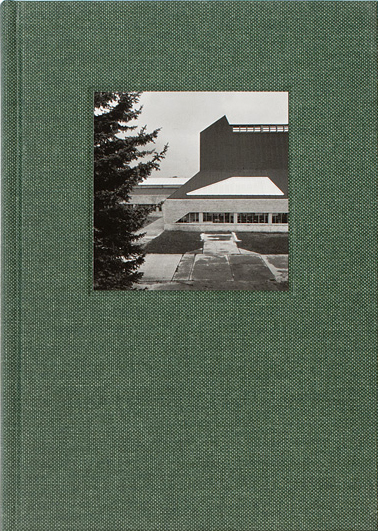
Gerry Johansson - Hattfabriken/Luckenwalde
490 SEK
- BindningInbunden
- Dimensioner i mm240x170x15
- FormgivareNilsson, Greger Ulf
- FotografGerry Johansson
- FörlagJohansson & Jansson
- ISBN9789197632621
- MedarbetareNilsson, Greger Ulf
- Sidor144
- SpråkSvenska Engelska Tyska
- TextförfattareWidenheim, Cecilia
- TitelHattfabriken
- Utgivningsår2013
- Vikt i g628
Beskrivning
Art.nr: 9789197632621
Bilder från Luckenwalde, Tyskland 2009 - 2012
The book Hattfabriken/Luckenwalde/Gerry Johansson (Hatfactory/Luckenwalde/Gerry Johansson) was published in conjunction with the exhibition Moment at the Museum of Modern Art in Stockholm 2012-13.
For Gerry Johansson, the project Hattfabriken/Luckenwalde (2009, 2011–12) began with a conversation in 1986 between him and Dick Bengtsson (1936-1989), when he was commissioned to portray the artist.
In the late sixties Dick Bengtsson’s made a series of paintings paraphrasing work by Edward Hopper and Piet Mondrian. The swastikas that were included in these paintings led to long and emotive discussions and also to physical attacks on his works. One of the most important paintings from that period is the diptych Hat and Cap Factory (1969). The painting is based on a black-and-white photograph of the architect Erich Mendelsohn’s modernist factory building in Luckenwalde, an industrial town south of Berlin. The design of the building is unlike any other in the history of architecture, it seems most of all to be a fantasy construction in a cubist tradition.
The building, Hutfabrik Friedrich Steinberg, Herrman & Co, in Luckenwalde is the first industrial building built in steel reinforced concrete and has a long and dramatic history. It was built by the Jewish families Herrman and Steinberg, 1921/23. They were forced to sell it in 1934 to the Nazi regime who started production of anti-aircraft guns. In 1945-56 it was turned into a repair hall for the Soviet army. The factory has since the early 2000's been rebuilt and restored.
The photographs are document the architectural details of the building and during Gerry Johansson's wanderings around the city, where he also found places and buildings that reflect the history of the factory and the tumultuous political periods from the 1920s to the present.
A text, by Cecilia Widenheim, director of Malmö Art Museum, in Swedish, English and German gives a background to the artistry of Dick Bengtsson.
The book Hattfabriken/Luckenwalde/Gerry Johansson (Hatfactory/Luckenwalde/Gerry Johansson) was published in conjunction with the exhibition Moment at the Museum of Modern Art in Stockholm 2012-13.
For Gerry Johansson, the project Hattfabriken/Luckenwalde (2009, 2011–12) began with a conversation in 1986 between him and Dick Bengtsson (1936-1989), when he was commissioned to portray the artist.
In the late sixties Dick Bengtsson’s made a series of paintings paraphrasing work by Edward Hopper and Piet Mondrian. The swastikas that were included in these paintings led to long and emotive discussions and also to physical attacks on his works. One of the most important paintings from that period is the diptych Hat and Cap Factory (1969). The painting is based on a black-and-white photograph of the architect Erich Mendelsohn’s modernist factory building in Luckenwalde, an industrial town south of Berlin. The design of the building is unlike any other in the history of architecture, it seems most of all to be a fantasy construction in a cubist tradition.
The building, Hutfabrik Friedrich Steinberg, Herrman & Co, in Luckenwalde is the first industrial building built in steel reinforced concrete and has a long and dramatic history. It was built by the Jewish families Herrman and Steinberg, 1921/23. They were forced to sell it in 1934 to the Nazi regime who started production of anti-aircraft guns. In 1945-56 it was turned into a repair hall for the Soviet army. The factory has since the early 2000's been rebuilt and restored.
The photographs are document the architectural details of the building and during Gerry Johansson's wanderings around the city, where he also found places and buildings that reflect the history of the factory and the tumultuous political periods from the 1920s to the present.
A text, by Cecilia Widenheim, director of Malmö Art Museum, in Swedish, English and German gives a background to the artistry of Dick Bengtsson.